
Shoulder Bursitis Surgeon in Ahmedabad, Gujarat
Relieving Shoulder Bursitis
Shoulder bursitis is inflammation of the bursa, the small fluid-filled cushion that lets the rotator cuff glide under the bony arch at the top of the shoulder. When that space is tight, the bursa and tendon are pinched with overhead movement, causing the familiar painful arc. Dr. Hiren Patel treats shoulder bursitis in Ahmedabad, mostly without surgery, at PMG Hospital.
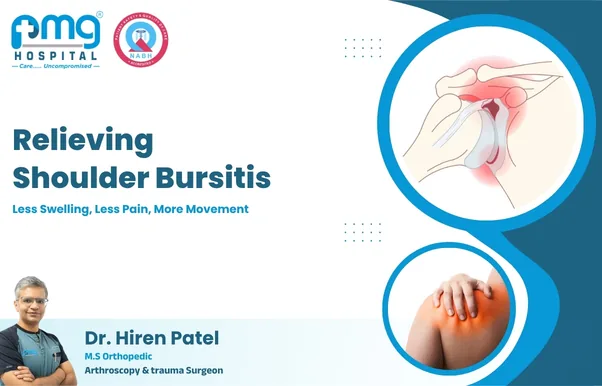
- For a painful arc and overhead shoulder pain
- Targeted injection to settle the inflammation
- Posture and scapular physiotherapy
- Arthroscopic decompression for resistant cases
What is shoulder bursitis?
A bursa is a thin, fluid-filled sac that reduces friction where tissues move over one another. In the shoulder, the subacromial bursa sits between the rotator cuff tendons and the bony arch (the acromion) above them. When the space under that arch is tight - because of the shape of the bone, a spur, poor posture, or a swollen tendon - the bursa is repeatedly compressed and becomes inflamed. This is why bursitis, impingement and rotator cuff irritation usually go together: they are different parts of the same "pinch" under the acromion.
Symptoms and causes
The pain has a recognisable pattern, which is what points to the diagnosis:
- A painful arc - pain through the middle of raising the arm to the side, easing at the top
- Pain reaching overhead or behind the back, and lying on the shoulder at night
- Ache on the outer upper arm rather than deep in the joint
- Often triggered by repetitive overhead work, sport, or a period of unaccustomed activity such as painting or lifting
How it is diagnosed
The diagnosis is mainly clinical - the pattern of pain and specific impingement tests during examination. An X-ray is used to look for a bone spur or the shape of the acromion, and an ultrasound or MRI is arranged where a rotator cuff tear needs to be ruled out, because a tear is treated differently. A diagnostic injection into the subacromial space can also help confirm the source, since good relief from it points clearly to bursitis and impingement.
Non-surgical treatment
Shoulder bursitis settles without surgery in the great majority of patients, and this is always the first approach. It combines activity modification to avoid the aggravating movements, anti-inflammatory measures, and a targeted corticosteroid injection into the subacromial space to break the cycle of inflammation. The most important part is physiotherapy - correcting posture and retraining the shoulder-blade muscles so the cuff no longer catches under the arch. Done properly, this addresses the cause rather than just the symptom, which is what prevents it returning.
Arthroscopic subacromial decompression
Surgery is considered only when genuine impingement pain persists despite a proper course of injection and physiotherapy. Arthroscopic subacromial decompression is a keyhole procedure that makes more room under the arch: the inflamed bursa is removed, and any bone spur or the undersurface of the acromion is shaved back so the cuff has space to glide freely. It is a day-care operation, and because the muscles are not cut, recovery is quicker than after a tendon repair - a sling for comfort only, early movement, and a return to desk work within a week or two.

- Experience
- 14+ years
- Surgeries
- 14,000+
shoulder bursitis specialist in Ahmedabad
The key with shoulder bursitis is to treat it thoroughly without surgery, and to recognise the minority who genuinely need more room made under the arch - as well as to catch the rotator cuff tears that hide behind the same symptoms. Dr. Hiren Patel completed a dedicated international fellowship in Sports Medicine & Shoulder Surgery at St. Mary's Catholic Hospital, Seoul, South Korea, alongside 14+ years of orthopaedic practice and 14,000+ surgeries at PMG Hospital, Gota. Learn more about Dr. Hiren Patel, or see related rotator cuff repair and frozen shoulder.
Frequently asked questions
How long does shoulder bursitis take to settle?
With the right treatment, most shoulder bursitis improves over a few weeks to a few months. An injection often settles the pain quickly, but the lasting result comes from the physiotherapy that corrects the underlying mechanics, so completing that programme is what stops it returning. Only a minority need surgery.
How many steroid injections can I have?
An injection is very effective, but it is used sparingly, generally no more than two or three into the same shoulder, spaced out because repeated steroids can weaken the very tendons it sits beside. If the pain keeps returning after an injection or two, that is usually the signal to look harder at the cause or to consider decompression, rather than to keep injecting.
Is bursitis the same as a rotator cuff tear?
No, though they cause similar pain and often coexist. Bursitis is inflammation of the cushion under the bony arch and is usually treated without surgery. A rotator cuff tear is an actual tear of the tendon, which causes weakness as well as pain and may need repair. Distinguishing the two with examination and, where needed, an ultrasound or MRI is what decides the right treatment.